
Resin Bound Driveways Explained: Resin vs Tarmac
A resin bound driveway is a surface made from natural stone aggregate fully coated in a clear resin, trowelled by hand to a smooth, seamless, porous finish. It is one of the most popular driveway surfaces in the country, but "resin drive" covers two very different products, and choosing between resin and tarmac comes down to how each is built, how it drains, and how you want your driveway to look. This guide explains resin bound, resin bonded and tarmac so you can make the right call for your property.
By Jamie Robinson, surfacing contractor · Last updated 10 July 2026
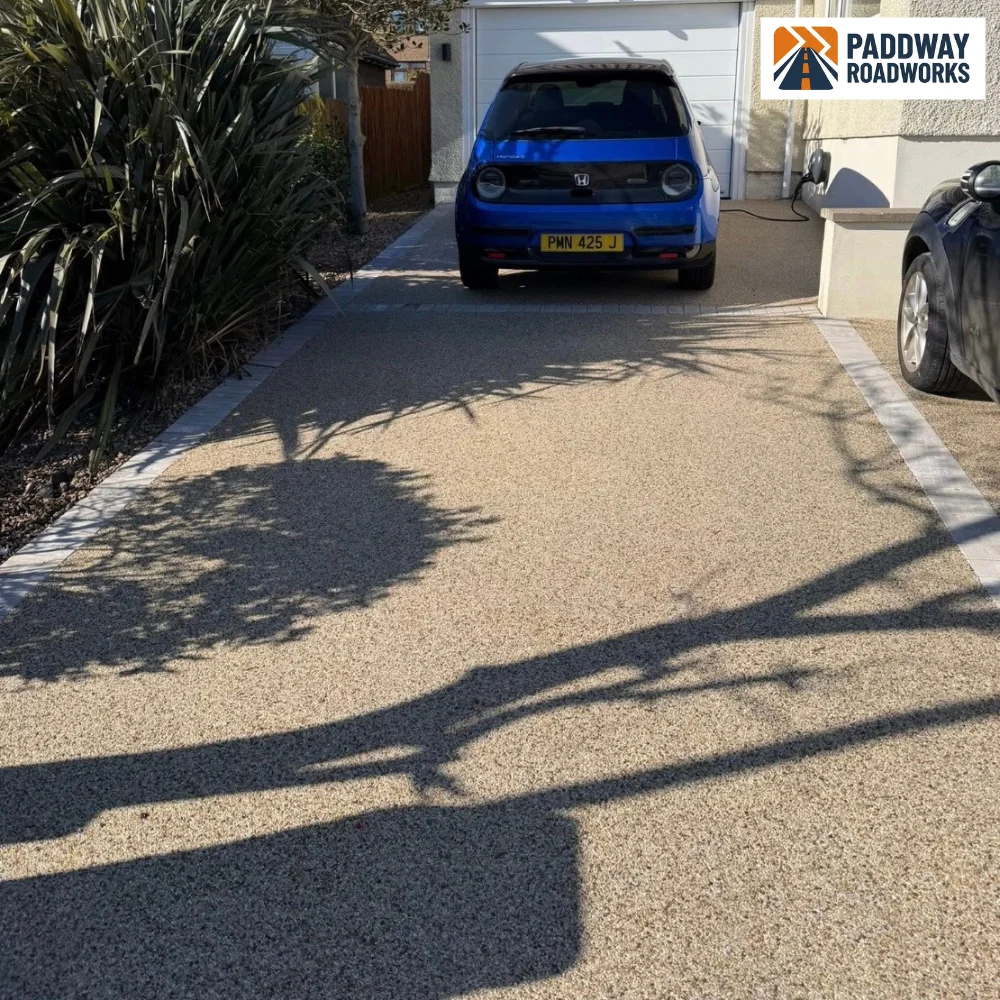
Resin Bound, Defined
Resin bound is a cold-laid surface in which stone aggregate is mixed with a clear resin in a forced-action mixer, then spread and trowelled smooth over a prepared base. Because every stone is fully coated and the mix is laid as one continuous layer, the finished surface is smooth underfoot, jointless and porous, so water drains straight through it. It comes in a wide range of natural stone blends and colours, which is a large part of why it is chosen for driveways where kerb appeal matters. Laid correctly over a sound base, it gives a clean, high-end finish you do not get from a standard surface.
Resin Bound vs Resin Bonded
The two are often confused, and they are genuinely different surfaces.
Mixes the aggregate and resin together, then trowels the blend on. The result is smooth, seamless and permeable, and it is the surface most people mean when they picture a modern resin driveway.
Paints resin onto the base first, then scatters loose stone over the top. It gives a textured, grippy finish that looks like loose gravel but stays put. It is not permeable, and some stone can work loose over time.
For a driveway, resin bound is usually the surface you want: smoother, longer-lasting and permeable. Resin bonded has its place on slopes and ramps where extra grip matters. Jamie advises which is right for your driveway and how it will be used, so you are choosing on the facts rather than the name.
How Resin and Tarmac Are Built
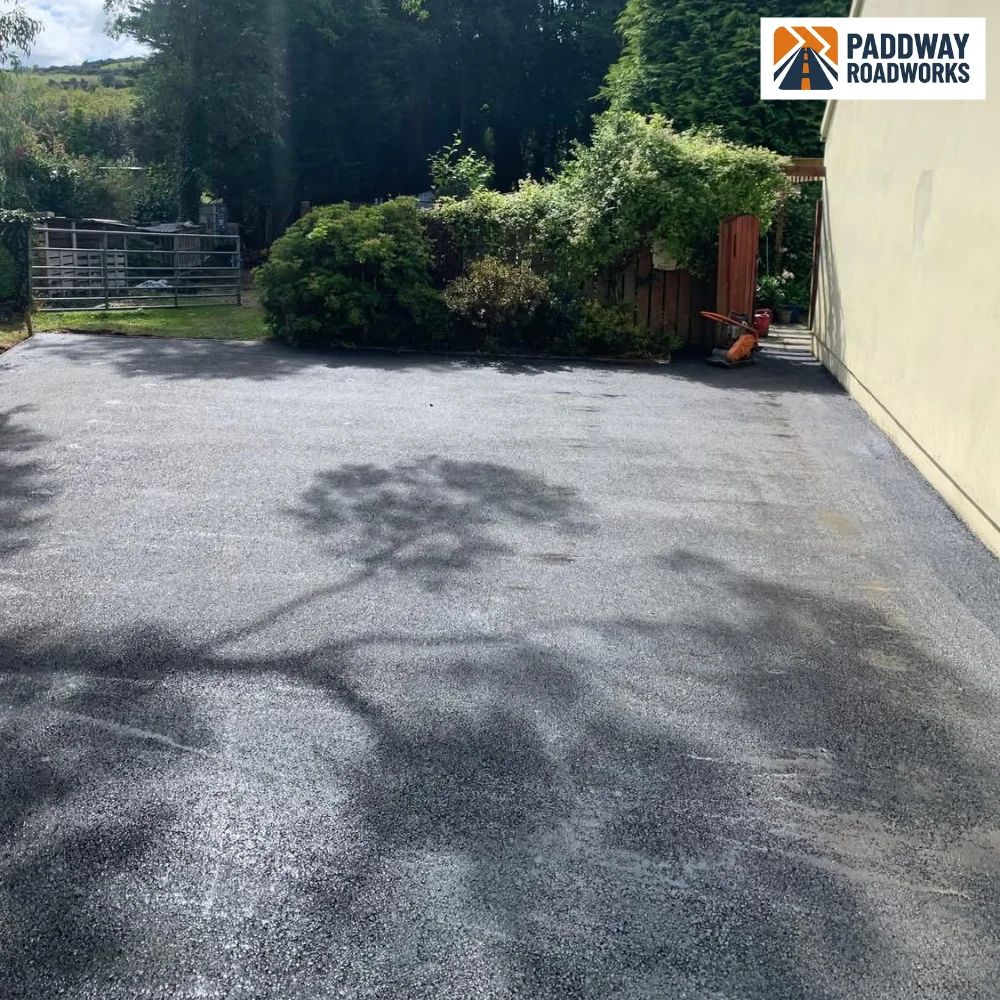
Both surfaces live or die on what is underneath them, and that is where a full surfacing contractor earns their keep. Tarmac is laid hot: a compacted stone sub-base carries the weight, then bituminous tarmac is spread and rolled hot to a dense, sealed finish, built up in layers to the right depth for the traffic it will take. Resin bound is laid cold, but it still needs a sound, solid base to go onto, most often a fresh tarmac or concrete base laid and cured first, then the resin and stone trowelled over the top once it has set. A resin surface is only ever as good as the base beneath it, which is why we build the base to the same standard we would put down for a road before a single trowel of resin goes on. Every base is assessed, prepared and, where it needs it, laid new, rather than resin trowelled over tired ground and hoped for.
Permeability, Drainage and SuDS
This is the biggest practical difference between the two. Resin bound is porous, so rainwater soaks straight through the surface and into the ground beneath. That makes it SuDS-friendly and means it usually meets the drainage rules that an impermeable surface over five square metres can otherwise require planning permission or a soakaway to satisfy. Tarmac is a sealed, impermeable surface, so on a tarmac drive the water has to be managed: correct falls are set so it runs off cleanly, and channel drains or a soakaway are added where the site needs them. Neither is a problem when it is planned properly at the survey, but it is worth understanding that a resin bound drive handles surface water differently from a tarmac one, and that shapes what each job involves.
Lifespan and Which Suits Which Property
Both surfaces are long-lasting when they are built properly. A well-laid resin bound driveway typically lasts 15 to 25 years, and a professionally laid tarmac driveway holds up for 15 to 20 years, in both cases longer on a drive that only carries cars. The choice is really about the property and the use. Resin bound suits homeowners who want a smooth, permeable, high-end finish with a choice of colours, on a driveway of a manageable size. Tarmac suits larger areas, long or shared drives, private roads and anywhere that takes heavy or constant traffic, where it is usually the quickest and cheapest surface to lay. There is no single right answer, only the right answer for your driveway. Jamie gives you an honest, expert assessment of which surface genuinely suits your home, your ground and how the drive will be used.
Jamie Robinson
Jamie is the owner of Paddway Surfacing Solutions, a surfacing contractor with 17 years' expertise laying resin bound, tarmac, block paving and imprinted concrete driveways, plus car park and road surfacing, across Nottinghamshire, Lincolnshire and South Yorkshire.
"Resin or tarmac, the surface is only ever as good as the base beneath it. Get the groundwork right and either one lasts."Jamie Robinson, Owner & Surfacing Contractor
Resin vs Tarmac: Frequently Asked Questions
What is the difference between resin bound and resin bonded?+
Is a resin driveway better than tarmac?+
Do resin driveways need planning permission?+
How long does a resin bound driveway last?+
Can you lay resin over an existing tarmac driveway?+
Talk to a Resin and Tarmac Driveway Specialist
If you are choosing between resin and tarmac, get expert advice from a surfacing contractor who lays both, with 17 years' expertise and every driveway backed by our 3-year workmanship guarantee. Explore resin bound driveways, compare tarmac driveways and surfacing, or see our block paving options.
Last updated: 10 July 2026